My father-in-law has had quite a few narrow escapes. In the last two years, two out of three narrow escapes have been attributed to septicemia. Or more accurately in his case – Urosepsis.
My father-in-law suffers from multiple complications including Complete Renal Failure (CRF), Cerebral Hemorrhage induced Hemiplegia (paralysis of one side of the body), Diabetes Mellitus Type II and Hypertension. While we perform Peritoneal Dialysis (CAPD) to address the renal failure, there is little we can do about his paralysis. An year worth of physiotherapy later, we concluded that his paralysis was here to stay.
His blood pressure is generally on the higher side and without medicines shoots up-to 180+/90+. We were quite surprised when his BP gradually fell to 130/70 levels and we did not have to give him BP medicines anymore. Gradually, he pressure started falling further. While most of the day it hovered around 110/65 levels, occasionally it would dip to 90/60.
This was totally inexplicable to our untrained minds. We started wondering whether we were providing him with sufficient salt intake? was he suffering from dehydration? Was this a reaction to some medication? Was his blood sugar too high or too low?
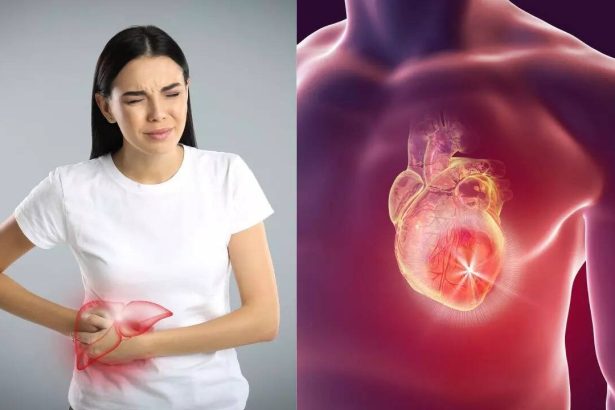
Noticeably enough, his consciousness levels were fading and he was having difficulty staying awake and communicating. Upon questioning he would answer that he was feeling fine, but he appeared to be dozing. Simultaneously, we noticed that his BP levels had fallen to as low as 65/48.
We called the Doctor (Dr. P. Sivaram, Urologist, Satya Kidney Center, Hyderabad) immediately and were told that my father-in-law could be suffering from Septicemia and his life was in danger unless he was immediately admitted to the hospital.
7 days, Rs. 90,000/- later, my father-in-law emerged from the hospital awake, hungry and more conscious than he had been since his cerebral hemorrhage. Good news; narrow escape we are told.
The kind Doctor provided us with an explanation about what happened:
Looking back, my FIL’s MIL (my wife’s grandmother) showed similar symptoms and passed away in her sleep in less than 24 hours. While the lady complained of a mild fever in the morning and was administered antipyretic followed by Saline solution (to contain falling BP), by 7PM she was having trouble keeping awake. She was admitted to the hospital at 10PM and suffered a massive cardiac attack at 4AM the following morning.
In the investigation that followed, it appeared that the lady was suffering from an infected toe since two months and was on homeopathic medicine. She also had a possible ischemic heart condition which had been diagnosed partially. When the septicemia stuck due to infection spreading into her blood, her already weak heart could not cope up.
Could her life have been saved? Definitely. If only someone had spotted the symptoms of septicemia in advance and advised us appropriately. If only information about how to spot septicemia and it’s general tendency to affect the elderly was available and emphasized.
04 Sep
Posted by: Rajib Ghosh in: CGHS
from CGHS Helpline <email id hidden>
sender-time Sent at 4:33 PM (GMT+05:00). Current time there: 10:36 PM. ✆
to Rajib Ghosh <email id hidden>
date Fri, Sep 4, 2009 at 4:33 PM
subject Re: CGHS Forms on the Internet
mailed-by nic.in
Dear Sir,
Thanks for your Email.
We would like to inform you that downloaded Medical Reimbursement forms are acceptable for reimbursement.
For any further query you may call us at 011-66667777
Thank You
CGHS-Helpline
—– Original Message —–
From: Rajib Ghosh <email id hidden>
Date: Wednesday, September 2, 2009 12:16 am
Subject: CGHS Forms on the Internet
To: helpline-cghs <email id hidden>
> Hello,
>
> I have noticed that CGHS Forms for Medical Reimbursement are available on the CGHS website.
>
> Is it CGHS’s official position that forms downloaded and printed from the website are acceptable at CGHS Dispensaries and Head-offices in cities?
> My question stems from the fact that CGHS Dispensary (Bhowanipore, Kolkata) clearly told me that downloaded-printed forms are not accepted
> at the dispensary; and I must obtain the pre-printed form from the dispensary only.
>
> Regards
> – Rajib Ghosh
> Son-in-law of CGHS Beneficiary Shri. Tapan Kumar Basu
As per CGHS requirements, I have to take my FIL to a Govt. Hospital every month for consultation.
Over a period of time, I have come to accept this as de-facto and no longer question CGHS officials about why consultation by Doctor’s at private hospitals (hospitals that are empaneled by CGHS) is not accepted when it comes to prescribing medicines.
While my FIL was at Kolkata, we would take him to S.S.K.M. hospital and to be honest, we had no faith in the ability of doctor’s at that hospital to administer customized care to my critically ill FIL. We had an army of Private doctors who would recommend tests and medicines and we had to use all our ingenuity to persuade the doctor at the Govt. hospital to prescribe what the private doctor had recommended.
This however is not the case back at home. At Hyderabad, we visit the Nizam’s Institute of Medical Sciences (NIMS) and consult with Dr. K. V. Dakshinamurthy; who IMHO is an excellent doctor and a gentleman to boot. He has been very sympathetic and never fails to advice and reassure us w.r.t. the well-being of our patient.
A new issue that we are facing at NIMS is the A.P. Goverment’s Arogyasree scheme that entitles millions of poor citizens of the State of A.P. to avail expensive medical treatment at Govt. Hospitals at the states cost. This has increased the influx of patients at the Govt. hospitals by a quantum leap leaving the generally meager resources at these hospitals stretched to a limit. This has dramatically increased the wait time for CGHS beneficiaries who only want a prescription of medicines but now must compete with the thousands of patients wishing to avail free medical procedures.
This highlights following three lacunae which should be addressed by CGHS: Read the rest of this entry »
Loads of questions are being posed by frantic CGHS members about the CGHS scheme. This post attempts to clarify the process of obtaining treatment under CGHS scheme. It chiefly covers the process to obtain pre-approved treatment. Obtaining Emergency Treatment & Subsequent Reimbursement Claim is covered here.
When transferring my disabled and un-well FIL to Secunderabad for treatment, we were faced with a problem: Should we fly to Hyderabad or take the train? The fare difference was hardly much but the time saved and possible reduction in trauma to patient was substantial. We decided to fly to Hyderabad and started inquiring about the process to shift a disabled (handicapped) or critically ill passenger by air.
We chose to fly with IndiGo since they had a distinct advantage in terms of fare and some other Low Cost Airlines (LCA) already had disadvantage in terms of service. We booked tickets for all of us (5 members) on Feb 8, 2008 and crossed our fingers. Turned out, IndiGo was a good choice after all. Read the rest of this entry »
As I mentioned earlier, my FIL (DM2, CRF, HTN, Hb+) suffered from Intra-Cranial Hemorrhage (ICH) which left him paralyzed on the left-side of his body (Left Hemi-Paresis) and the ensuing treatment caused his kidney problem (End State Renal Disease – ESRD) to aggravate and become Complete Renal Failure (CRF).
After being in Kolkata for almost 6 months, it was time for wife and me to return to Secunderabad (where are are based). Since it was not possible for us to leave my FIL to the care of unsupervised nurses, we decided to move him with us to Secunderabad. Hence we simultaneously started the process of getting temporary permission to avail CGHS benefits at Secunderabad. Read the rest of this entry »
Delightfully simple, the ‘Medical 2004 Form for Reimbursement of Medical Claims of CGHS beneficieries’ is a breeze to fill-in and the submission process is extraordinarily simple. NOT.
Sourcing blood is complicated. Thankfully most of us never have to face the travails that this entails. Chronicled briefly below, is my experience in tackling the process of obtaining this life saver. A simple lesson learnt – donate blood, at-least once a year.
Read the rest of this entry »
| M | T | W | T | F | S | S |
|---|---|---|---|---|---|---|
| « Nov | ||||||
| 1 | 2 | 3 | 4 | 5 | ||
| 6 | 7 | 8 | 9 | 10 | 11 | 12 |
| 13 | 14 | 15 | 16 | 17 | 18 | 19 |
| 20 | 21 | 22 | 23 | 24 | 25 | 26 |
| 27 | 28 | 29 | 30 | |||